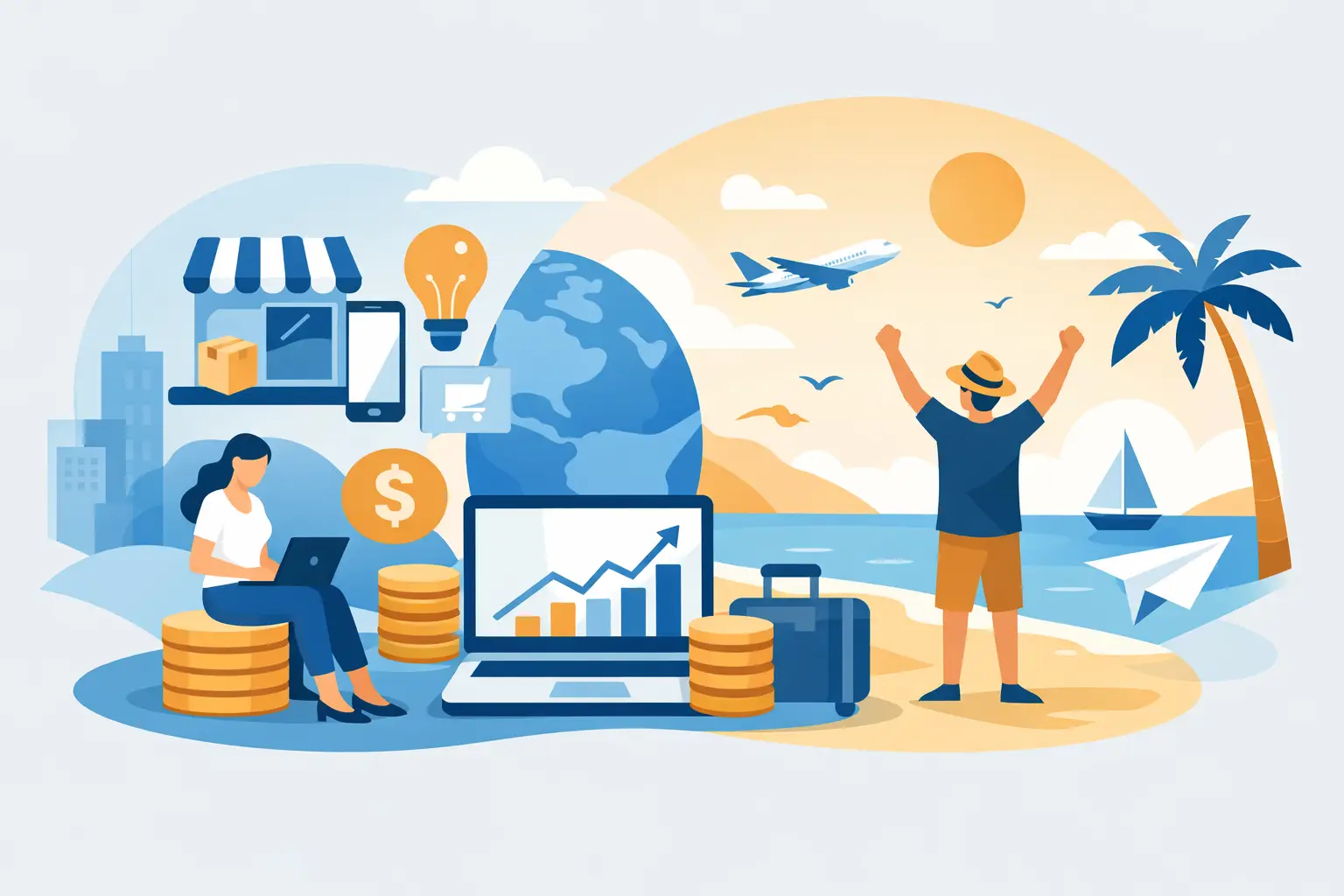
A business does not have to start with a lease, a warehouse, or a life-changing loan. The best low cost business models give you a way to begin where you are, use skills and tools you already have, and build toward more control over your time, income, and location.
That does not mean every online opportunity is easy or instant. Low cost often means you invest more focus, consistency, and willingness to learn at the beginning. But for parents, employees, travelers, career changers, and anyone tired of building someone else’s dream on their schedule, that trade-off can be worth it. More information can be found at https://www.kazalahmed.com
What Makes a Business Model Truly Low Cost?
A low-cost business model has little or no inventory, does not require a physical storefront, and can be operated with affordable digital tools. Ideally, it can also serve customers beyond your local area and continue creating opportunities when you are not actively working every hour.
The startup price matters, but it is not the whole story. A model can be cheap to launch and still be expensive in time if it requires constant custom work. The strongest options balance low financial risk with the potential to create repeatable systems, reach more people, and grow without tying every dollar to another hour of your day.
Before choosing one, ask yourself three practical questions: Do I want to sell a service, a product, or access to information? How much time can I realistically give this each week? And do I want quick cash flow, long-term scale, or a combination of both?
1. Affiliate Marketing
Affiliate marketing lets you earn a commission by recommending products or services from other companies. You do not create the product, handle fulfillment, or provide customer support for the offer itself. Your role is to build trust, attract the right audience, and connect people with a solution that fits their needs.
The entry cost can be low because you can start with content, email marketing, social media, or simple lead-generation systems. It also has global potential. Someone can learn about an offer through your content at any time, from almost anywhere.
The trade-off is that affiliate marketing is not simply posting a link and waiting for income. It requires an audience, a clear message, and responsible promotion. Choose offers you can genuinely stand behind. Trust is the asset that makes this model last.
2. Digital Products
Digital products include templates, guides, planners, spreadsheets, mini-courses, checklists, and other resources people can access online. Once you create the product, it can be delivered repeatedly without the cost and stress of shipping physical inventory.
This makes digital products appealing for people with knowledge, experience, or an organized way of solving a common problem. A busy parent might create meal-planning templates. A fitness enthusiast might build beginner workout trackers. A professional with years of experience could package a useful process into a simple guide.
The challenge is visibility. Creating a helpful product is only step one. You also need a way to reach people who need it. Start narrow instead of trying to help everyone. A specific product for a specific problem is usually easier to explain and sell than a broad product with no clear audience.
3. Freelance Services
Freelancing is one of the fastest low-cost paths to earning online because it turns an existing skill into an offer. Writing, graphic design, virtual assistance, bookkeeping, social media management, video editing, customer support, and website support can all be delivered remotely.
You may not need a formal degree or years of experience to begin. What you do need is the ability to solve a real problem reliably. Start with a simple service, create a clear offer, and focus on delivering a strong result for your first clients.
Freelancing can bring income sooner than some other models, but it is often tied to your personal availability. That is why many freelancers eventually create packages, build a small team, add recurring monthly services, or use their expertise to develop digital products. It can be an excellent starting point, especially if you want to prove to yourself that people will pay for what you know.
4. Online Coaching or Consulting
Coaching and consulting allow you to help people make progress using your knowledge, perspective, and accountability. You might help clients with career transitions, wellness goals, organization, marketing, parenting systems, financial habits, or a specialized professional skill.
Startup costs are usually limited to basic communication tools, scheduling software, and a way for people to learn about your offer. You can begin with one-on-one sessions and later expand into group programs, workshops, memberships, or recorded training.
This model works best when you can clearly explain the outcome you help people pursue. People are not buying an hour on your calendar. They are buying clarity, confidence, progress, or a faster path through a challenge. Be careful not to overpromise results. Your credibility grows when your message is encouraging and realistic.
5. Lead Generation
Lead generation is a powerful model for people who enjoy connecting businesses with potential customers. Instead of selling a product directly, you help a business attract qualified people who have shown interest in what it offers.
For example, a local service provider may need more calls, appointments, or quote requests. An online business may need email subscribers who want to learn more about a program. You create campaigns, content, landing pages, or referral systems that help bring interested prospects into the conversation.
The model can be scalable because businesses consistently need customers. It also fits the freedom-focused entrepreneur who wants to work online and build systems that operate beyond a single location. Still, lead generation requires ethics and attention to quality. A large number of uninterested contacts is not valuable. The goal is to help the right people find the right solution with clear consent and honest communication.
6. Print-on-Demand Products
Print-on-demand lets you sell customized items such as shirts, mugs, notebooks, wall art, and accessories without purchasing inventory upfront. A third-party provider prints and ships an item after a customer places an order.
This reduces the financial risk of traditional retail. You can test designs and niches without filling a garage with boxes. It can also be enjoyable for creative people who understand a particular community, hobby, profession, or lifestyle.
However, profit margins can be slimmer than they appear. You still need a recognizable concept, compelling designs, and marketing that earns attention. The most successful sellers do more than place generic phrases on products. They understand their audience and create items that feel personal, useful, or worth sharing.
7. Content-Based Online Businesses
A content-based business can grow around a newsletter, video channel, podcast, social platform, or educational community. Over time, content can create trust and lead to multiple income streams, including affiliate commissions, digital products, sponsorships, coaching, and paid memberships.
This is one of the best low cost business models for long-term brand building because your message can reach people around the clock. A helpful video, email, or post may continue bringing in new people long after you publish it.
The downside is that content takes patience. Early results can feel slow, especially when you are building around a job or family responsibilities. The answer is not to post everywhere. Choose one platform you can maintain, speak to a clear audience, and share useful ideas consistently. Momentum often comes from staying focused long enough for people to recognize what you stand for.
Choosing the Model That Fits Your Life
There is no single perfect business model. If you need income quickly, freelancing or consulting may be the best first move. If you want a model with repeatable sales and greater scale, digital products, affiliate marketing, lead generation, or content can create more leverage over time.
You can also combine models in a smart order. Start with a service to learn what people need. Use that experience to create content or a digital product. Build an email list so you are not dependent on one social platform. Add complementary income streams only after your first offer is working.
The goal is not to chase every opportunity. It is to build an online business that supports the lifestyle you deserve – more time with family, more freedom to travel, more control over your schedule, and more confidence in your ability to create income on your own terms.
Pick one model that feels realistic for your current season, give it focused effort, and let your first small win become proof that a different future is possible. Are you ready? Take your first step at https://www.kazalahmed.com.
Leave a Reply